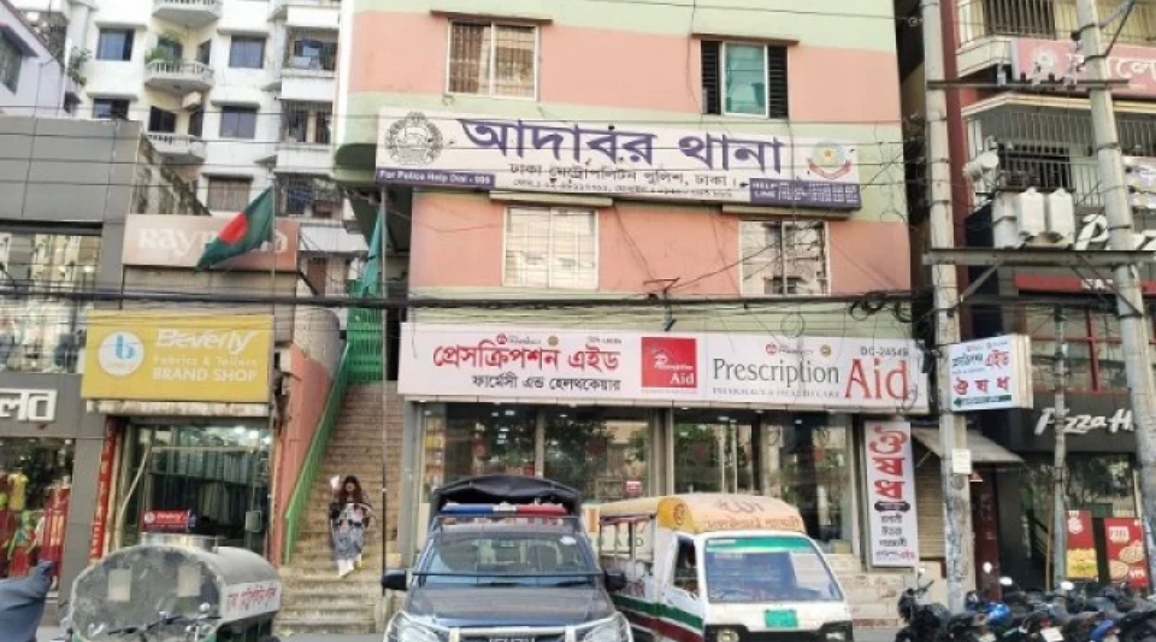
Adabor Thana
Adabor Thana is an administrative area of Dhaka North City Corporation, located in southwestern Dhaka near the Buriganga River. It was formed in 2007 from a division of Mohammadpur...
- Type
- Metropolitan Thana
- Established
- 2007
No listings in Adabor yet
Know a doctor, shop, service or place to visit here? Add the first listing — it goes live after a quick review.
Adabor police station
Officer on duty
Adabor police station
Emergency numbers
Legal aid & human rights
Free legal advice and complaints.
National helplines (toll-free)
Station priorities
Our commitments
- Zero tolerance against drugs
- Stop violence against women and children
- No to militancy and terrorism
- Community policing for safer neighbourhoods
Police station services
Typical services — contact the station for details. GDs and complaints can also be filed online.
- General diary (GD)
- Case / FIR filing
- Lost documents & items report
- Women, child & elderly help desk
- Police clearance support
- Cybercrime complaints
- Traffic & accident help
- 24/7 patrol & emergency response
About Adabor
Adabor Thana is located in the southwestern part of Dhaka City, bordering the Buriganga River and sharing boundaries with Darus Salam Thana, Sher-e-Bangla Nagar Thana, and Mohammadpur Thana. Savar Upazila and Keraniganj Upazila are also nearby, on the western side of the thana.
The thana was created on 27 June 2007, through the division of Mohammadpur Thana. This administrative reorganization aimed to better serve the growing population and manage the area’s development.
Adabor Thana covers an area of 3.23 square kilometers (798 acres), situated between 23°45' and 23°46' north latitudes and 90°20' and 90°22' east longitudes. Several housing societies are located within the thana, including Mohammadia Housing Society, Nobodoy Housing Society, and Japan Garden City.
According to the 2022 census, Adabor Thana had a population of 215,246, with a literacy rate of 83.75%. The religious demographics include a predominantly Muslim population (98.10%), along with Hindu, Christian, Buddhist, and other communities.
The area includes several housing societies and residential areas, such as Shyamoli Housing, Turag Housing, and Mehedibagh Housing, contributing to its mixed residential character.